I. General rules
Inclusive dance competition (hereinafter referred to as the “festival”) is held as one of the events of the Inclusive Dance International Charity Festival (hereinafter referred to as the “festival”).
Present rules define conditions, procedure and requirements for participants.
Competition is held among two participant groups:
- inclusive pairs;
- inclusive dance groups.
II. Inclusive pairs competition
1. Requirements
Only Combi Dance (when a disabled person dances with a non-disabled partner) is allowed at the inclusive dance competition. Duo Dance (when two disabled people dance together) is not allowed.
Disabled people with various diseases, including musculoskeletal, mental and sensory disorders or systemic disability can participate in inclusive dance.
People with different disabilities (including people in the same group) are allowed to participate in the same dance competition. Each of them must dance with a non-disabled person.
People of different ages (including people in the same pair) as well as relatives dancing with each other (including parents with children) are allowed to participate in the same dance competition.
The priority is given to dancing in a pair that consists of a man and a woman, but same-sex pairs are allowed in the following cases:
- parents and close relatives with children
- volunteers with disabled people whom they support.
Personal assistants of disabled dancers with severe diseases are allowed to participate in the competition in the same pair. In this case, the dance pair may consist of three persons (2 + 1).
2. Categories
Competition is held in the two categories of inclusive dance:
- Dancesport
- Dance Improvisation
Dancers participating in the Dancesport competition must perform basic figures of the dances, as well as show knowledge of the technical basis of their performance and musical accuracy.
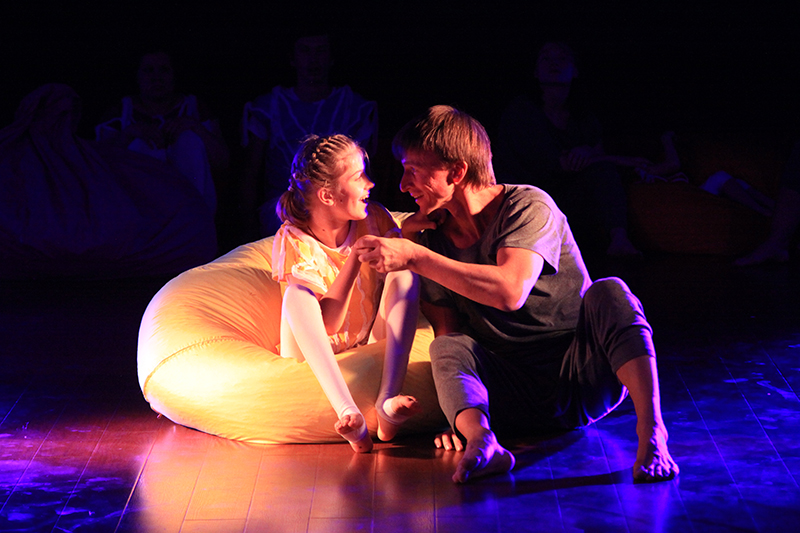
Dance Improvisation presuppose free movement to the music of different styles. In this case, overall level of participants’ dancing skill, their ability to improvise, the quality of interaction with a partner(s), musicality, and only then the knowledge of various figures and technique are estimated.
3. Pairs Classification
Dancers compete in the “D” and “A” classes, divided by the level of dance skills: “D” - Debutants - the first level; "A" - Advanced - progressive, inсreased level.
In the D-class three types of Dancesport dances (waltz, samba, jive) or two dance improvisations are performed.
In the A-class four Latin or Standard dances, as well as three dance improvisations are performed.
Participants can be grouped by age and divided into the following age categories:
- Children: 3–12
- Teenagers: 13–18
- Adults: 19–35
- Seniors: 35+
In this case, the age group of the pair is determined by the age of the disabled person.
Dancer is allowed to dance with different partners during one competition, but in different categories (Dancesport and Dance Improvisation).
Teachers and dance instructors of the disabled dancers can also take part in competitions in the D or A-class, depending on the level of movement disability of their partners and their level of dance skill.
4. Dances
D-class
Sportdance: slow waltz, samba, jive.
Dance Improvisation: two dances to the music of different styles (the first dance is fast, the second dance is slow, in the final the second dance is improvisation with someone else`s partner).
A-class
Sportdance (Standard): Slow Waltz, Tango, Slow Foxtrot, Quickstep.
Sportdance (Latin): Samba, Cha- cha, Rumba, Jive.
Dance Improvisation: three dances to the music of different styles (the first dance is fast, the second dance is slow, in the final the second dance is improvisation with someone else`s partner).
5. Procedure
In the case of registration of only one or two pairs the classes will be united.
The pairs from the class with one or two registrations will not get promotion points, unless one or both pairs reach the finals.
In the case of registration of three or six pairs the contestants will dance a “general look” in the semi finals. (A general look is a round in which the jury observes, but not judges.)
In the case of registration of seven or more pairs the contestants will dance a qualifying round and after that a redance round in which pairs that didn’t score enough points for the next round dance. Depending on the amount of pairs follows a quarter or/and a semi final.
All classes have a final. At least three pairs dance in the final.
For the qualifying round, the repêchage, the quarter and semi finals a cross-system is used. This means the pairs who get the most crosses from the jury will go to the next round.
In the final the skating-system is used: the jury members give each pair a mark and afterwards the scrutineer will calculate the results.
Dancers are forbidden to make dangerous elements that can injure others, cause injury to the dancer performing the trick, or his partner. By decision of the Chief Judge, a dance pair who received a remark during a warm-up or during a competition should exclude a dangerous element from her dance improvisation. In the case of re-use of this element the pair will be disqualified.
The Chief Judge together with the holder of competition has the right to change this procedure if another subdivision is useful for the competitors. This may happen in case of too many competitors, too little time and not enough space.
6. Judging criteria
While judging the inclusive pair competition, the jury must use the following judging criteria:
- pleasure in dancing and dancing together
- musical and sense of rhythm
- technique and dance pose of both partners
- presentation of the dance pair on the dance floor and use of space
- using both partners abilities
III. Inclusive dance groups competition
1. Requirements
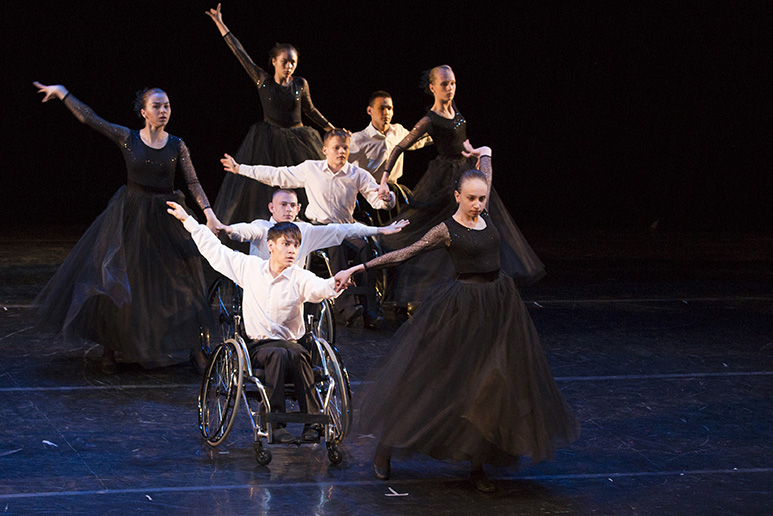
Disabled and non-disabled people are to participate in a dance group.
There are to be not less than 3 participants in a dance group.
Disabled people with various diseases, including musculoskeletal, mental and sensory disorders or systemic disability can participate in inclusive dance are allowed to participate in the same dance group.
People of different ages (including people in the same pair) as well as relatives dancing with each other (including parents with children) are allowed to participate in the same dance group.
2. Categories
Competition is held in the nine categories of inclusive dance:
1.Ball dance
Dance numbers based on the technique of sports ballroom dancing (slow waltz, tango, Viennese waltz, slow foxtrot, quickstep, samba, cha-cha, rumba, pasodoble, jive) can be submitted to the competition.
2.Historical dance
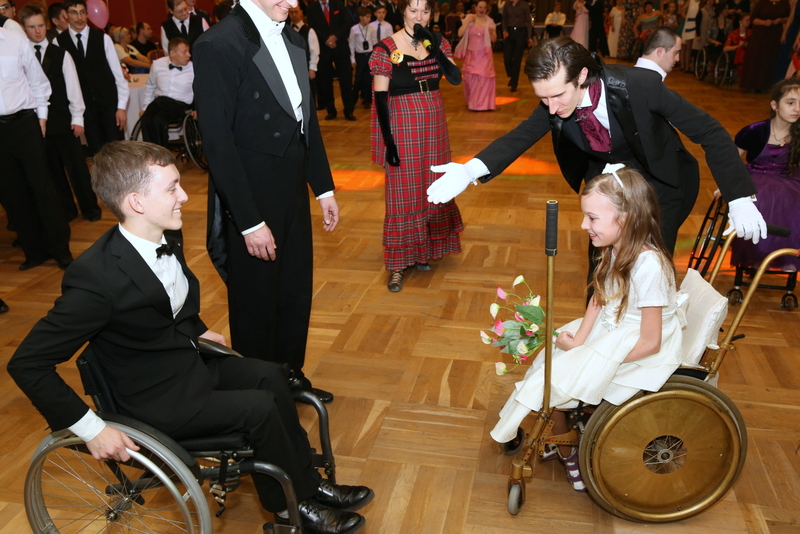
Dance number based on the choreography of historical dances (polka, mazurka, polonaise, minuet, etc.) can be submitted to the competition.
3.Classical dance
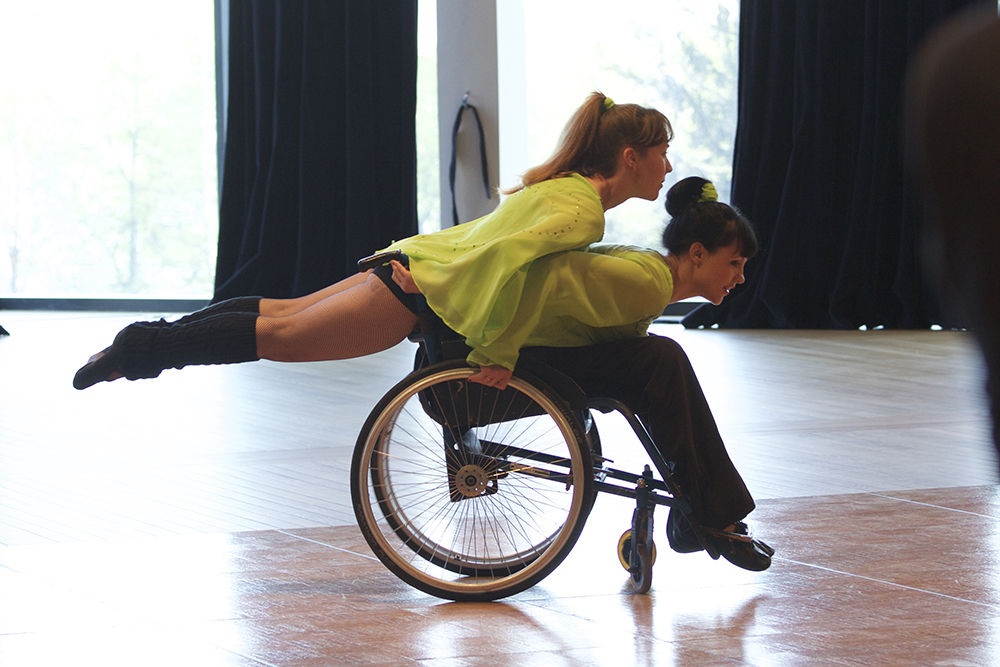
Dance number based on the classical choreography (ballet, demi-classic, pointe dance, etc).
4.Acrobatic dance
Dance numbers containing acrobatic elements (acrobatic rock and roll, circus numbers, etc.).
5.Social dance
Dance number based on social dance styles (salsa, bachata, mamba, hustle, Argentine tango, merengue, etc.) can be submitted to the competition.
6.Folk dance
Dance performances based on the dances of the peoples of the world (including oriental dance and belly dance) can be submitted to the competition.
7.Modern dance
Dance number based on the morden choreography (modern, jazz modern, contemporary, performance, improvisation, etc.)
8.Pop dance
Stage, plote and subject dances can be presented in this direction.
9.Club (street) dance
In this direction dance based on club dance styles (hip-hop, jazz-funk, break dance, house, tectonic, R’n’B, etc.).
All dance composition to music selected by dance group are prepared beforehand except for compulsory dance.
3. Age groups
Children (3-12)
Juniors (13-18)
Senior (19 and older)
In the case when the team is of different ages, the team belongs to the age category of the prevailing number of participants.
4. Nominations
Couple (2 people)
Small Group (3-5 people)
Ensemble (more than 6 people)
5. Procedure
One group/ensemble can participate in competitions in different directions
The inclusive dance group competition is held for two and more dance groups in each category.
In the case of registration of only one or two dance groups the classes will be cancelled or combined.
Groups are demonstrate dance compositions in turn in the style of the direction in which the competition takes place.
In the competition a point-based system is used: the jury members give points for each dance group performance. Dance groups which collected the highest point sum takes first place and wins the competition.
The Chief Judge together with the holder of competition has the right to change this procedure if another subdivision is useful for the competitors. This may happen in case of too many competitors, too little time and not enough space
6. Judging criteria
While judging the inclusive dance groups competition, the jury must use the following judging criteria:
- choreography
- mastery
- image of the dancers
- using abilities of all group participants
IV. Jury/adjudicators
The jury consists of teachers and dance instructors or acknowledged jury members of international competitions. These jury members have to satisfy the educational standards.
V. Dance positions in pair
Standard dances must be danced in a closed position where it is possible.
Closed facing position or a promenade position or counter promenade position can be used.
Each position should be performed with double hand/underarm hold like in classic dancesport.
In each position a standing dancer holds hands with a wheelchair dancer in keeping the shape of the handhold adopted in the Standard dance as much as possible.
In Latin dances free hold is allowed, but not longer than 4 bars.
In Dance Improvisation, Modern and Folk dances free hold is allowed during the whole dance.
The solo choreography can also be performed.
The solo choreography means performing dance movements (figures) by one partner, while the other stands without moving.
In all dance categories free hold is allowed, if a disabled dancer can not keep permanent hand contact during the dance.
Personal assistant is allowed in dance pair to provide help to the disabled partner with a severe desease. Personal assistant is not to play important role in dance itself. Personal assistant can not perform choreography different from a disabled dancer, as their task is to facilitate the movements of the disabled dancer.
VI. Clothing
Festive clothes are appreciated.
Competition clothes are clothes which can not be considered everyday wear.
The clothes should be modest and be able to pass a test for taste and good manners.
Advertisements on the wheelchair or competition clothes other than from the dance groups, parlop or wheelchair manufacturer are not allowed.
Wheelchairs should be kept in good condition.
The skirt or pants in dance improvisation should be free, not interfere with the movement of the legs, but not too short and not too long, and as the top you can choose a fitted top or T-shirt.
Competition clothes of the disabled person’s assistant must have no furnishings, match with the color of the partner’s competition clothes and can be black.
VII. Awarding
All participants who reached the final are awarded with certificates specifying the award.
The certificates are given to each partner in the pair and one certificate is given to a dance group.
Pairs who won 1st – 3rd places are awarded with the corresponding.
Dance groups which won 1st – 3rd places are awarded with the cups.
Souvenirs and prizes from coordinators, partners and sponsors can also be given.
VIII. Registration conditions
To participate in the competition dancer (dance group) is to submit request in the specified form.
Participants can pre-register using “online registration” and sending a request to This email address is being protected from spambots. You need JavaScript enabled to view it. or filling it in on web site www.inclusive-dance.ru.
The registration for the competition is carried out on-site before the competition after the qualification is passed.
A dancer (dance group) can register in different categories at the competition.
During the registration for the inclusive dance competition the disabled person is mentioned first.
In dance improvisation, the number is fixed on the back or back of the wheelchair of a dancer with a disability.